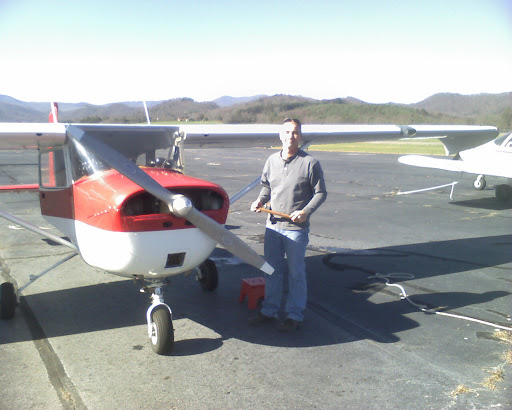
My friend Mitch about to take me up in his Cesna 150 to view the Smokies from a heavenly perspective.
Sent from my Windows Mobile phone
My friend Mitch about to take me up in his Cesna 150 to view the Smokies from a heavenly perspective.
Sent from my Windows Mobile phone

Two Rivers Church works with a Guatemalan medical ministry that demonstrates the Gospel in practical ways with the very poor. This gift will go to the purchase of a van to get to remote villages in rural Guatemala.
Sent from my Windows Mobile phone
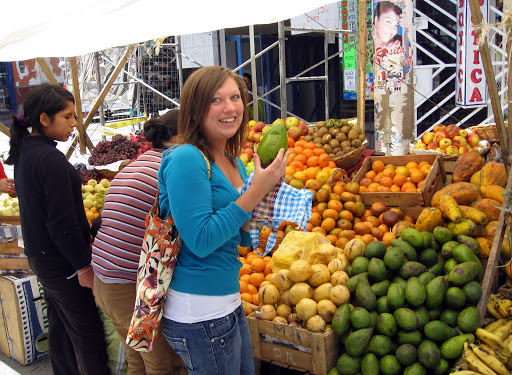
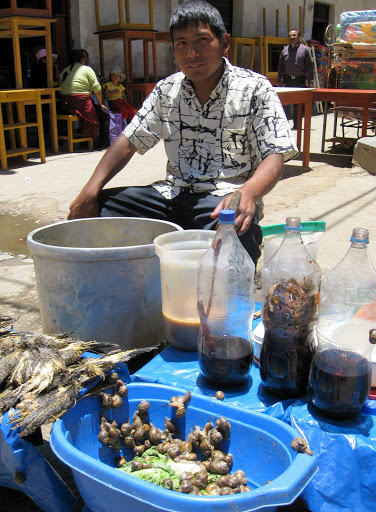
Change the faces and the language and this market in Tarma Peru would fit in perfectly just about anywhere in the majority world. Fresh fruit, vegetables and just about any type of folk foods and medicines are available and you can always negotiate the price if you think it’s too high. Bethany shows the local aguacate (avacado) that made for a great snack later in the day.
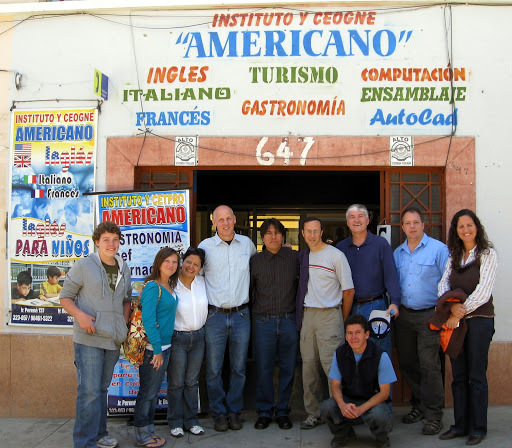
How do missionaries move into a new area? There are many approaches, but one that proves to be very effective is to find a “person of peace”. This is a person who may not be a Christian but who is sympathetic to the people bringing the Gospel. Often this person is influential in their community, can introduce the team to others and can open doors that would never open for a ministry team. In Tarma Peru one person of peace is Lucas. He owns a higher-education institute where young people in Tarma can take courses in various languages as well as become chefs. Lucas is a hard-working man who has a lot of influence in the Tarma community. He has invited our missionaries to teach English classes as well as teach on other important topics such as conflict resolution. Pray for Lucas (pictured in the center of this photo). He’s driven to work hard and is not able to spend a lot of time with his family. He has befriended our team in an incredible way. God has his hand on this man who has been our person of peace in Tarma.


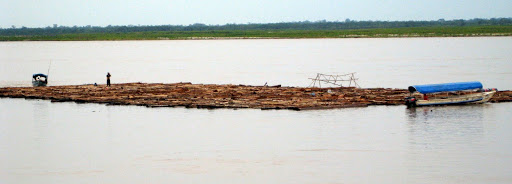
I couldn’t find an English translation for these types of trees, but in the past they were just used for cooking. Now they are used for making houses and fine furniture. It’s pretty impressive to see hundreds of these tied together and floating down the river. A shelter is set up on them, a motor attached for steering, and boats tie up to shuttle supplies back and forth for the long journey. Quite a different way of life.

Television has an interesting way of portraying life in other countries. My husband and I are frequently asked about living and retiring in Costa Rica because cable television shows indicate that living abroad in San Jose, Costa Rica is paradise. In fact, it was ranked number one in the Happy Planet Index (2009), and was reported to have a life expectancy second only to Canada, and the highest life satisfaction of all countries. Much of my ministry life in San Jose, however, is spent among the urban poor, in two barrios, Rio Azul and La Carpio, two areas that contrast sharply to the picture painted by world journalists. The average monthly income in this community of 40,000 inhabitants is less than $225 USD, while inflation hovers around 10.9% or more. In these areas, corrugated tin and scrap-metal shanties crowd the pothole-laden streets, and both areas receive tonnage of San Jose garbage daily. Odors mix in the air and one realizes that the needs are great, despite attempts of local government and non-profit organizations in addressing health, nutrition, public safety and societal issues. Last Friday, as I practiced the art of midwifery in a community clinic, I was overwhelmed as a young woman took off a handcrafted beaded necklace and placed it in my hands, covering my hands with her work-worn ones. Giving me this item cost her much. Later, during my long commute, I secretly wept and prayed for the indigent women and children in Costa Rica, and my small role in helping to alleviate their suffering. Despite the public image that La Carpio receives as a crime-ridden squatters’ community, there is heart buried deep in community calloused by social injustice, and the love of Christ can bring forth joy, healing and hope from urban poverty.
Ninety minutes across town, I was invited to a Iadies’ neighborhood Bible study where we spent several hours in a low-income neighborhood studying the Bible and singing praises with women who walk closely with Him despite poverty, diabetes, blindness, and age. Experiencing such joy reminds me that remaining in Christ as in the analogy of the vine and branches, will produce fruit despite the tempests of life. Missionaries in earlier decades( 70’s and 80’s) planted the seeds in this community and firm, unshakable roots have dug deep. My prayer is that wherever my family and I roam, that seeds will be planted, and even though we may not see full branches and beautiful fruit during our time here, that God, the cultivator and Master gardener will reap a plentiful harvest in years to come throughout Latin America and the world.
 TeamDuggan
Recent Comments